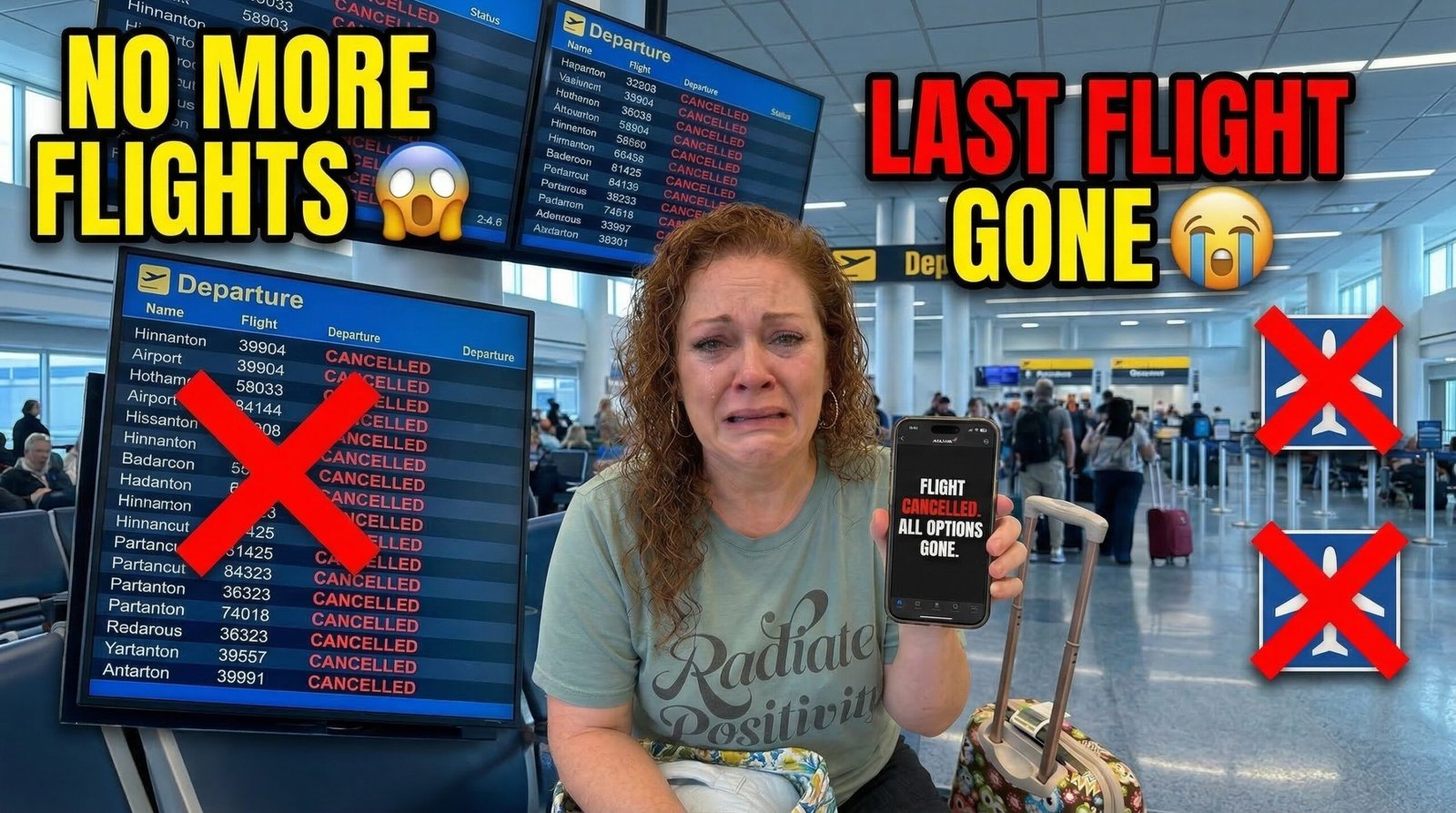
The Morning the Clock Decided to Win
It’s a specific kind of silence that wakes you up when you know you’ve messed up. It’s not the peaceful silence of a Sunday morning; it’s the heavy, deafening vacuum of an alarm clock that went off two hours ago while you were dreaming about being on a beach. For Bethany, that silence felt like a physical weight.
We’ve all had those mornings where the sun is just a little too high in the sky for comfort. You look at the phone, and for a split second, your brain tries to negotiate with reality. Maybe I have time. Maybe the flight is delayed. Maybe I can teleport. But then the adrenaline hits. It’s a cold, sharp spike that sends you from zero to sixty before your feet even touch the carpet. This wasn’t just a late start; it was a race against a schedule that doesn’t care about your sleep cycle.
The High-Stakes Art of Panic-Packing
Packing for a trip is supposed to be a curated experience. You pick the outfits, you fold the jeans, you double-check the toiletries. But when you’re ninety minutes away from a takeoff and forty minutes away from the airport, packing becomes an Olympic sport.
Bethany’s bedroom became a battlefield of polyester and regret. In those moments, you aren’t choosing clothes; you’re grabbing memories of clothes. You throw a sundress in next to a winter coat because your brain has stopped functioning logically. You can hear the ticking of a clock that isn’t even in the room. Every zipper that gets stuck feels like a personal insult from the universe. It’s the “organized chaos” that we tell ourselves we can handle, right up until the moment we realize we forgot our socks but packed three different types of chargers we don’t even own.
The Highway Gamble We Always Lose
There is a unique type of prayer reserved specifically for the TSA line and the highway traffic. Bethany’s ride to the airport was less of a commute and more of a desperate plea to the gods of infrastructure.
When you’re running late, every red light feels like a targeted attack. Every slow-moving truck is a villain in your personal movie. You find yourself talking to the GPS as if it has a soul, begging it to shave off just three more minutes. “Come on, baby, give me an 11:15 arrival,” you whisper, knowing full well that the math simply doesn’t add up. It’s the ultimate human delusion: believing that if we want something badly enough, physics will simply move out of our way.
Five Minutes: The Difference Between a Trip and a Tragedy
There is no distance greater than the three feet between you and a closed boarding gate. Bethany arrived at the counter breathless, hair slightly askew, clutching her ID like a golden ticket. But the look on the agent’s face was the look of a person who has seen this play a thousand times before.
“I’m sorry, the flight closed five minutes ago,” is a sentence that can age a person ten years in ten seconds. Five minutes. In the grand scheme of a human life, five minutes is nothing. It’s a long commercial break. It’s the time it takes to boil an egg. But at an airport, five minutes is the difference between sipping a cocktail in a new city and sitting on a linoleum floor next to a trash can. It’s the ultimate “what if.” If she hadn’t hit that one red light; if she had just skipped the second cup of coffee; if the universe had just blinked.
The “No Flights Left” Reality Check
The initial shock of missing a flight is usually followed by the “Fixer Phase.” This is when you put on your best smile and try to charm the airline staff into a miracle. But sometimes, the miracle is out of stock.
When the agent looked up from the screen and delivered the “bad news”—that every single seat on every single outbound flight was taken—the air left the room. This is the uncomfortable truth of modern travel: the system is at capacity. There is no “back-up” plan when the world is full. For Bethany, the realization that her mistake wasn’t just a delay, but a total shutdown, was visible in her eyes. The transition from “I can fix this” to “I am stuck” is one of the loneliest feelings in the world.
Why We Relate to the Disaster
Why do we find ourselves watching Bethany’s misfortune with such intensity? It’s because she is the avatar for our own secret incompetence. We live in a world that demands perfection—on-time arrivals, perfectly packed bags, flawless schedules. But humans are inherently messy. We oversleep. We lose our keys. We underestimate traffic.
Watching Bethany stand there in the terminal is like looking in a mirror during our worst moments. It reminds us that despite our technology and our calendars, we are still just mammals trying to navigate a world built on rigid numbers. There’s a strange comfort in seeing someone else fail so spectacularly, not because we’re mean-spirited, but because it makes our own small mistakes feel a little less heavy.
The Terminal as a Purgatory
An airport terminal when you don’t have a flight is a strange, liminal space. It’s a mall where you can’t buy anything meaningful and a hotel where you can’t lie down. Bethany’s story ends with her in this purgatory. The vibrant energy of the rush has been replaced by the dull ache of waiting.
There is a lesson here, though it’s one we usually have to learn the hard way. The “bad news” isn’t the end of the world, even if it feels like it when you’re staring at a “Departures” board that doesn’t have your name on it. It’s a forced pause. It’s the universe’s way of saying, “Slow down. You missed the beat, and now you have to wait for the next song.”
Finding Humor in the Hubris
At the end of the day, Kountry Wayne’s portrayal of this mess works because it finds the comedy in the tragedy. Bethany’s drama is over-the-top, yes, but it’s rooted in a very real human hubris. We think we can beat the system. We think we’re the exception to the rule.
And when we find out we aren’t, all we can really do—after the crying and the arguing with the gate agent—is laugh. Because tomorrow there will be another flight, another packing session, and another chance to actually set the alarm for the right time. Or, if you’re Bethany, another chance to miss it by four minutes instead of five.
The Long Walk to the Exit
There is a specific walk you do when you leave an airport without having gone anywhere. It’s a walk of shame, but also a walk of surrender. Bethany’s exit from the gate wasn’t just about moving her body; it was about moving her expectations.
The story of the missed flight is a universal human experience. It’s about the fragility of our plans and the absolute power of a ticking clock. As Bethany looks for a place to sit and figure out her next twenty-four hours, she represents all of us who have ever been “just a little too late” for the things we wanted most.
Tomorrow is a New Departure
The beauty of a disaster like this is that it eventually becomes a “remember when” story. In a week, Bethany will be telling her friends about the “crazy airport lady” who wouldn’t let her on the plane. In a month, it will be a funny anecdote.
But in that moment, at the gate, with no flights left and a suitcase full of mismatched clothes, it is the only thing in the world. And that’s what makes the story real. It’s not about the plane; it’s about the human heart trying to keep up with a world that moves just a little bit faster than we do.