The Brutal Truth About “Forever”: Why Being a “Wife” is More Than Just a Title
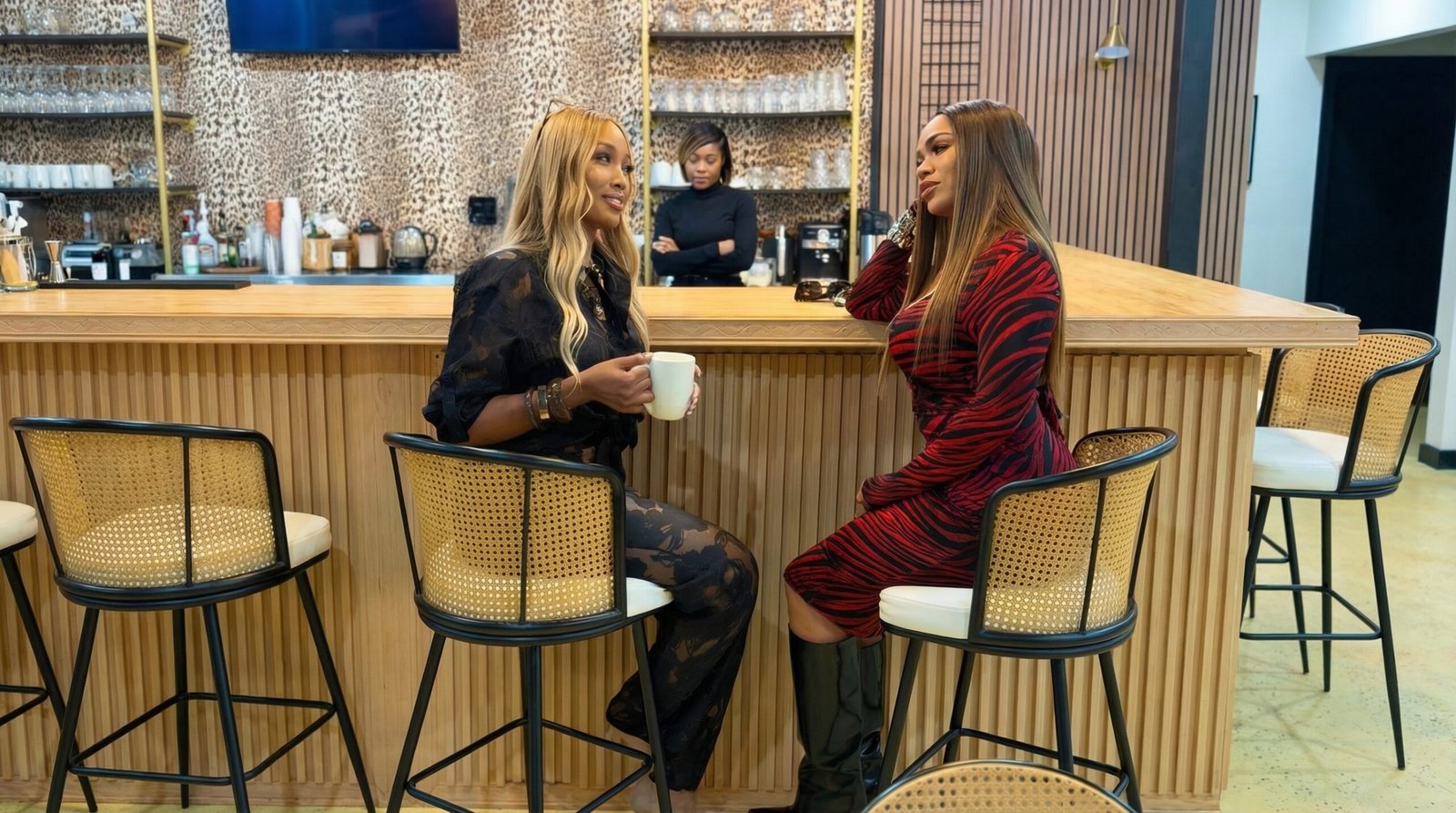
We’ve all been there—sitting across from a friend, pouring our hearts out about a relationship we really want to work, only to have that one “tell-it-like-it-is” friend drop a truth bomb that feels more like a grenade. That’s exactly what went down in the recent conversation between Shayla and Amber regarding Shayla’s future with Iman.
It’s a classic scenario that plays out in living rooms and coffee shops everywhere: one person is romanticizing the “happily ever after,” while the other is looking at the cold, hard receipts. But beyond the viral drama and the celebrity names like Teyana Taylor floating in the background, there is a much deeper conversation here about control, security, and what it actually means to be “wife material” in the modern dating world.
The Fantasy of the “Kitchen” and the Reality of the “Contract”
Shayla opens the conversation by mentioning how she’s trying to be “more like a wife.” She’s in the kitchen more, she’s feeding the family, and she’s trying to create a home. In her mind, these are the tokens you trade in to get a wedding ring. It’s a traditional view of partnership: If I provide the peace and the plates, he provides the protection and the permanent commitment.
But Amber isn’t buying it. And honestly? A lot of people watching probably aren’t either.
The disconnect here is a common trap. Shayla is performing the duties of a wife without the legal or emotional security of being one. She sees Iman paying her bills and being good to her son, Kai, as evidence of a future commitment. She thinks, “Why would he do all this if he didn’t want to marry me?”
Amber’s response is a bucket of ice water: Control. For a man with significant wealth—especially an ex-pro athlete who just came out of a high-profile marriage—paying someone’s bills isn’t necessarily a sign of devotion. For him, it might just be the “subscription fee” for a comfortable lifestyle. It keeps the situation stable, it keeps Shayla available, and it keeps him in the driver’s seat.
The “Post-Divorce” Freedom Factor
One of the most poignant points Amber makes is about Iman’s “newfound freedom.” When a man (or anyone, really) exits a long-term, high-stakes marriage—especially one as public as his was with Teyana Taylor—the last thing they usually want to do is sign another contract.
Marriage is hard work. As Amber puts it, it’s “for better or worse, rich or poor.” When you’ve already been through the “worse” and the “poorer” (or at least the legal mess of a split), the idea of jumping back into that fire is terrifying.
Amber’s prediction that he won’t marry again until he’s 70 or 80 might sound like a joke, but there’s a psychological truth to it. Some men wait until they no longer have the energy to “play the field” or until their “lifestyle” requires a caregiver rather than a partner. Shayla is looking for a partner for her youth; Amber is suggesting Iman is looking for a companion for his retirement.
The Trap of “Romanticizing” the Single Life
“I would just be thankful for my singleness if I were you,” Amber says.
This is where the two women fundamentally clash. Shayla views her singleness as a ticking clock. She’s “not getting any younger,” and she feels the pressure to secure her future. To her, being a “girlfriend forever” is a failure.
On the flip side, Amber views singleness as a superpower. She sees Shayla’s desire for marriage as a form of “fantasizing.” She’s pointing out that marriage isn’t a prize you win at the end of a relationship; it’s a lifestyle change that comes with its own set of heavy burdens.
When Shayla says she’s “not here to just be a girlfriend,” she’s setting an ultimatum. But the problem with ultimatums is that you have to be prepared for the other person to walk away. If Iman is happy with the current arrangement—paying the bills, having a “wife-lite” experience without the legal paperwork—he has no incentive to change the status quo.
Is It Love or Is It Logic?
This conversation highlights the age-old battle between the heart and the head.
Shayla’s Perspective (The Heart): I love him, he loves my son, he takes care of us, and I’m doing everything a wife should do. Therefore, marriage is the logical next step.
Amber’s Perspective (The Head): He’s already getting everything he wants without a ring. He’s rich, he’s free, and he’s been burned before. Therefore, marriage is a step backward for him.
It’s a brutal realization. You can be the “perfect” partner—you can cook every meal, be a great mother, and provide a peaceful home—and it still might not lead to a walk down the aisle. Commitment isn’t a reward for good behavior; it’s a choice made by two people who want the same future.
The Final Insult: “Not Getting Any Smarter”
The conversation ends on a incredibly sharp note. When Shayla doubles down on her stance, Amber retorts that Shayla isn’t “getting any smarter.”
It’s a harsh thing to say to a friend, but it reflects Amber’s frustration. She sees her friend building a house on sand and calling it a fortress. From Amber’s point of view, “smart” would be recognizing the situation for what it is: a comfortable, transactional relationship that provides immediate security but offers no long-term guarantees.
Shayla wants the title. Iman (according to Amber) wants the peace. Those two goals are often at odds.